
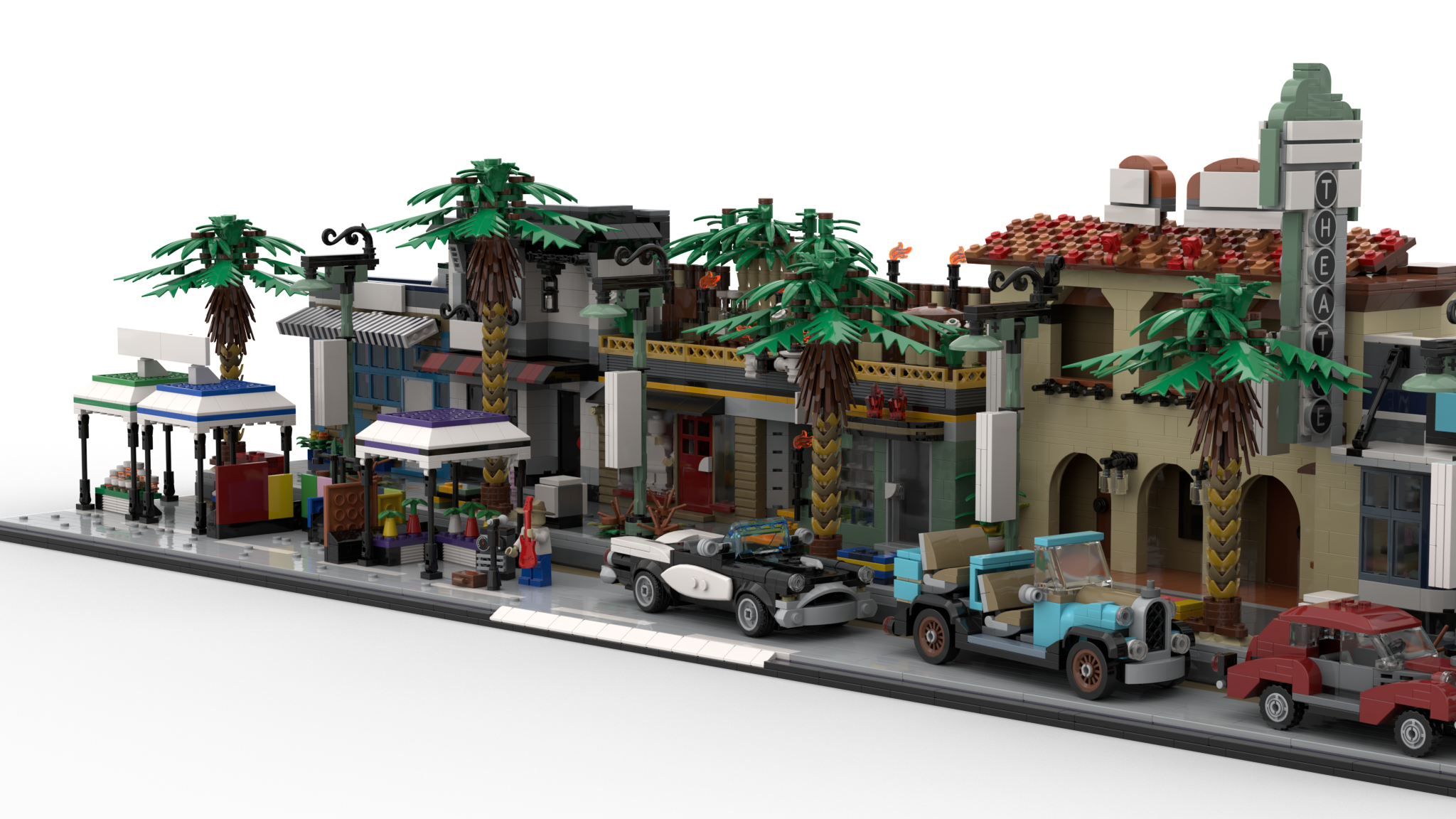
Born from a lifelong love of building and inspired by the iconic mid-century modern spirit of Palm Springs, this ambitious public art project reimagines the city’s most beloved architecture, landmarks, and everyday scenes entirely in LEGO® bricks.
[Click image for all project renderings]
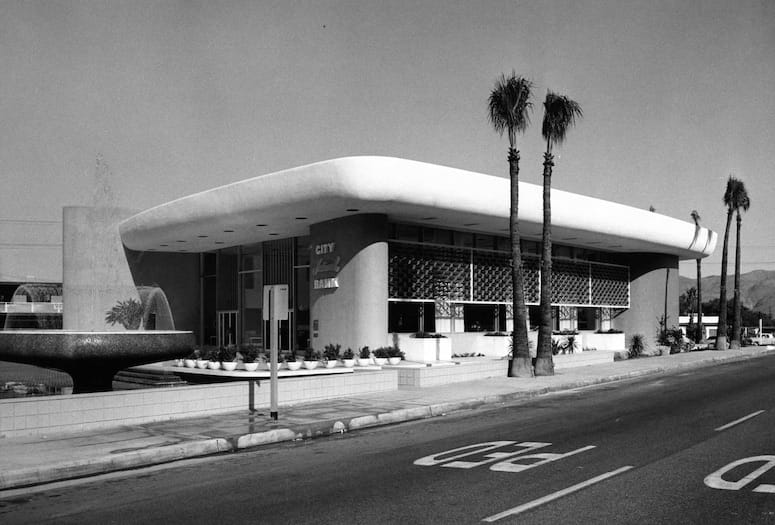
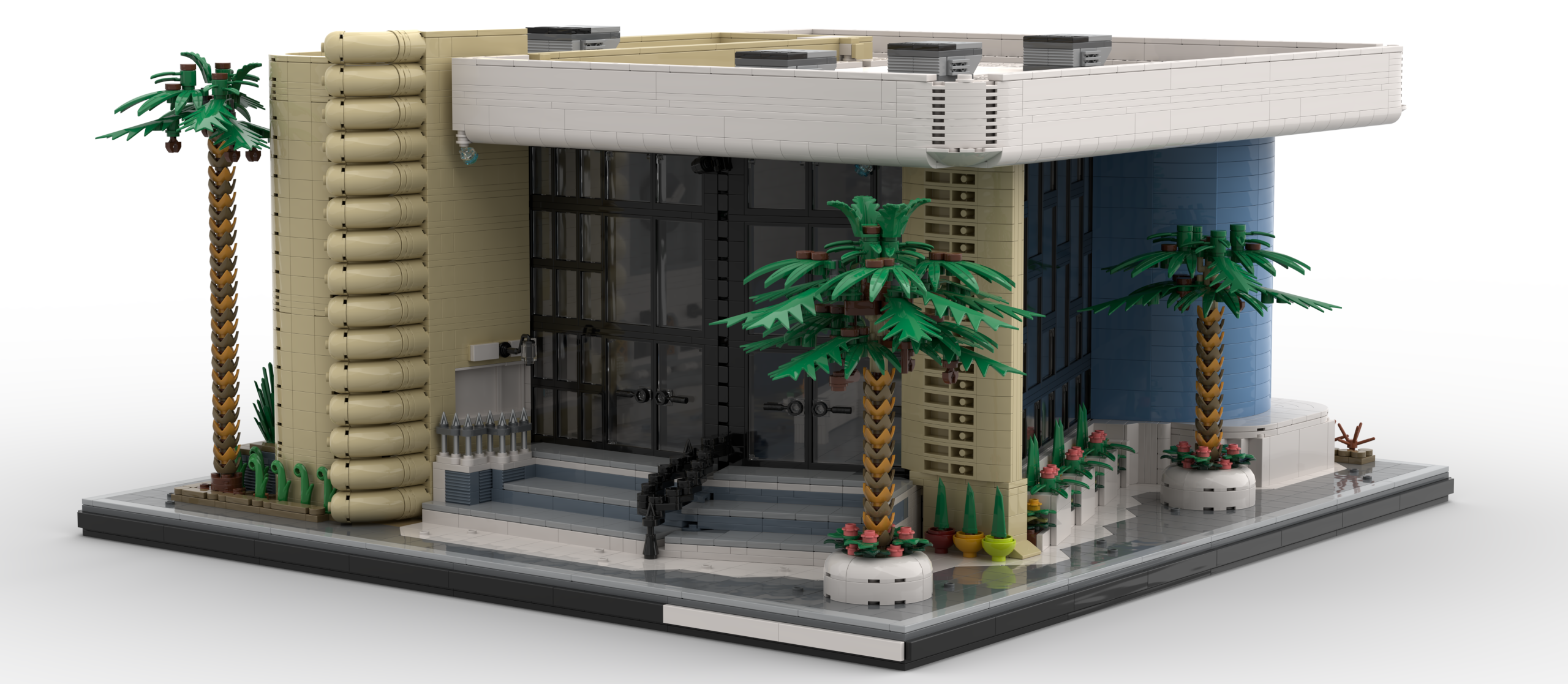
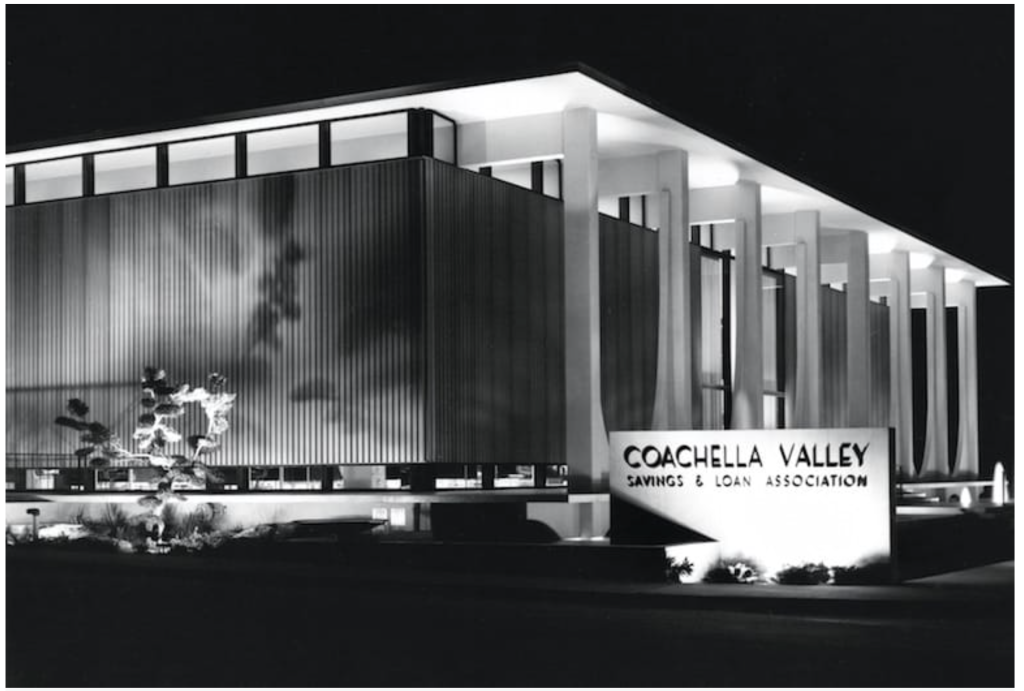
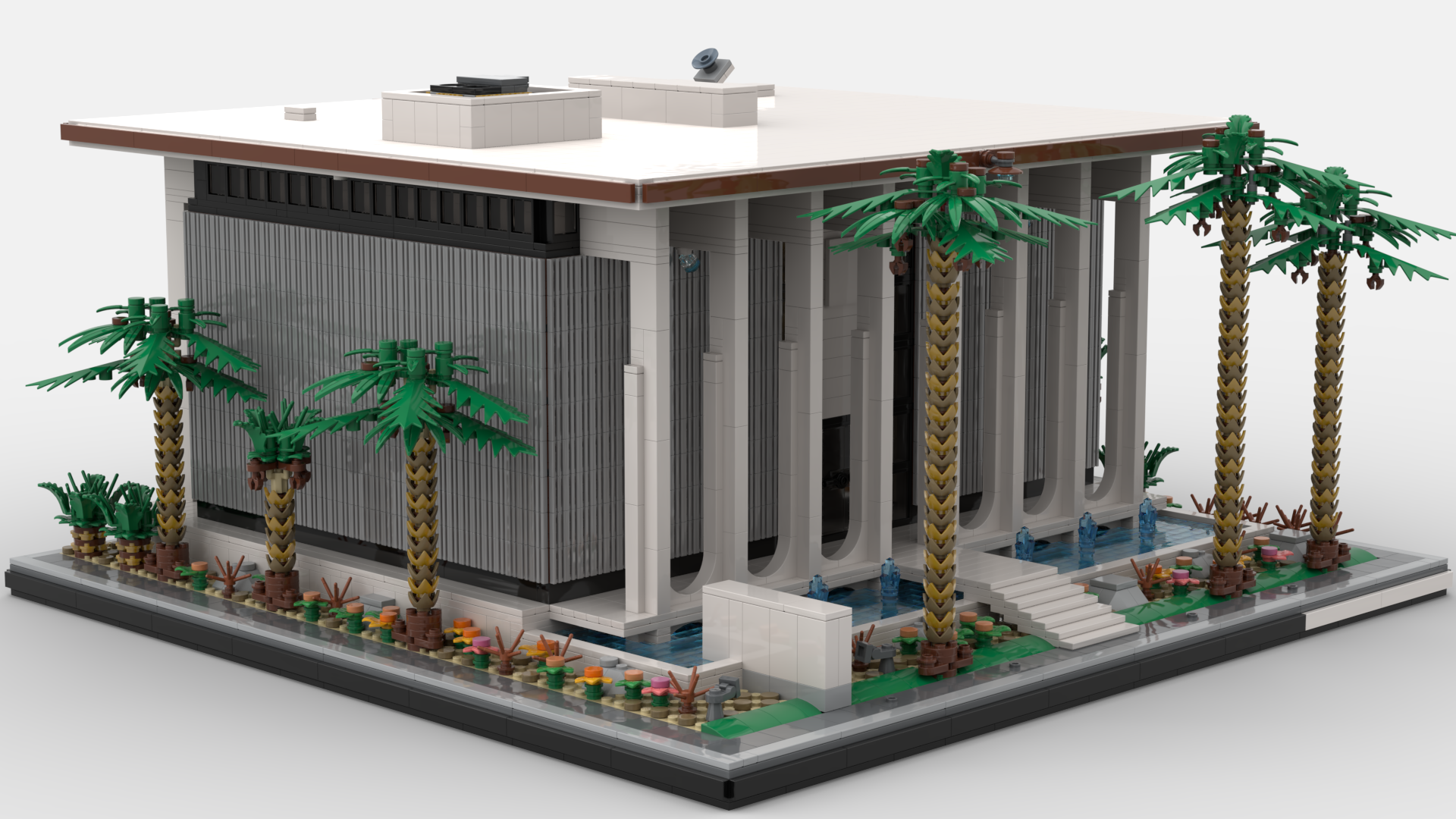
What began as a childhood imagination, rediscovered during the pandemic, has evolved into a bold vision: a series of highly detailed, illuminated LEGO® models – homes, banks, theaters, downtown streets, and cultural moments – that celebrate Palm Springs’ design legacy while inviting wonder, nostalgia, and play.
Planned as a phased, evolving public art endeavor, the project will culminate in publicly displayed installations accessible to residents and visitors alike. Please consider contributing through the GoFundMe campaign to help bring these miniature architectural artworks from virtual designs to real-world exhibition.
Why Public Art?
Palm Springs is a city that believes art belongs to everyone, woven into daily life rather than exclusively hidden behind museum walls. From the moment you arrive at the airport, to large-scale installations along city streets, to hand-painted downtown benches and traffic control boxes created by local artists, public art here is part of the city’s identity.
“”I want these brick-built interpretations of Palm Springs architecture and scenes to live in that same shared space—to surprise people, spark curiosity, and invite connection. By turning these works into public art, the project becomes less about my personal enjoyment and more about storytelling, accessibility, and giving something back to a city whose creative spirit is already proudly on display.
– Todd A. Jones
Projects Ready for Phase 1 Support
Mid-Century Modern Home
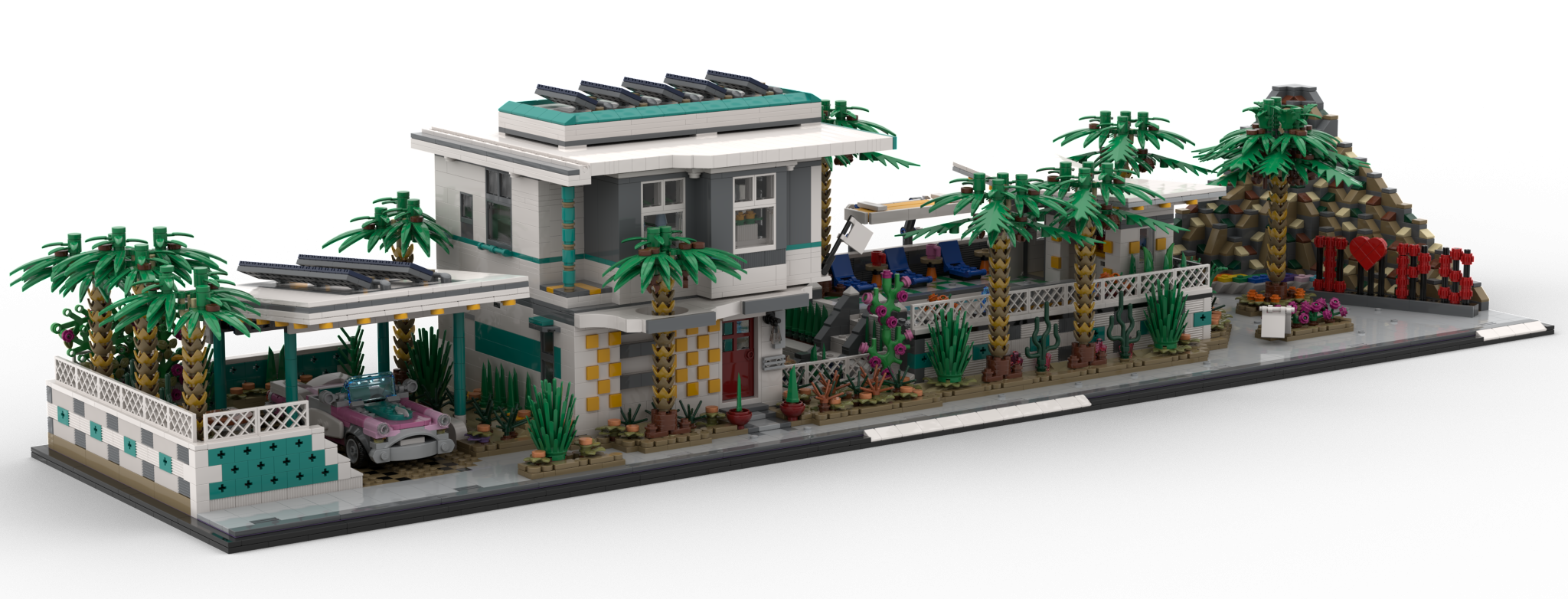
[Click image for zoom details]
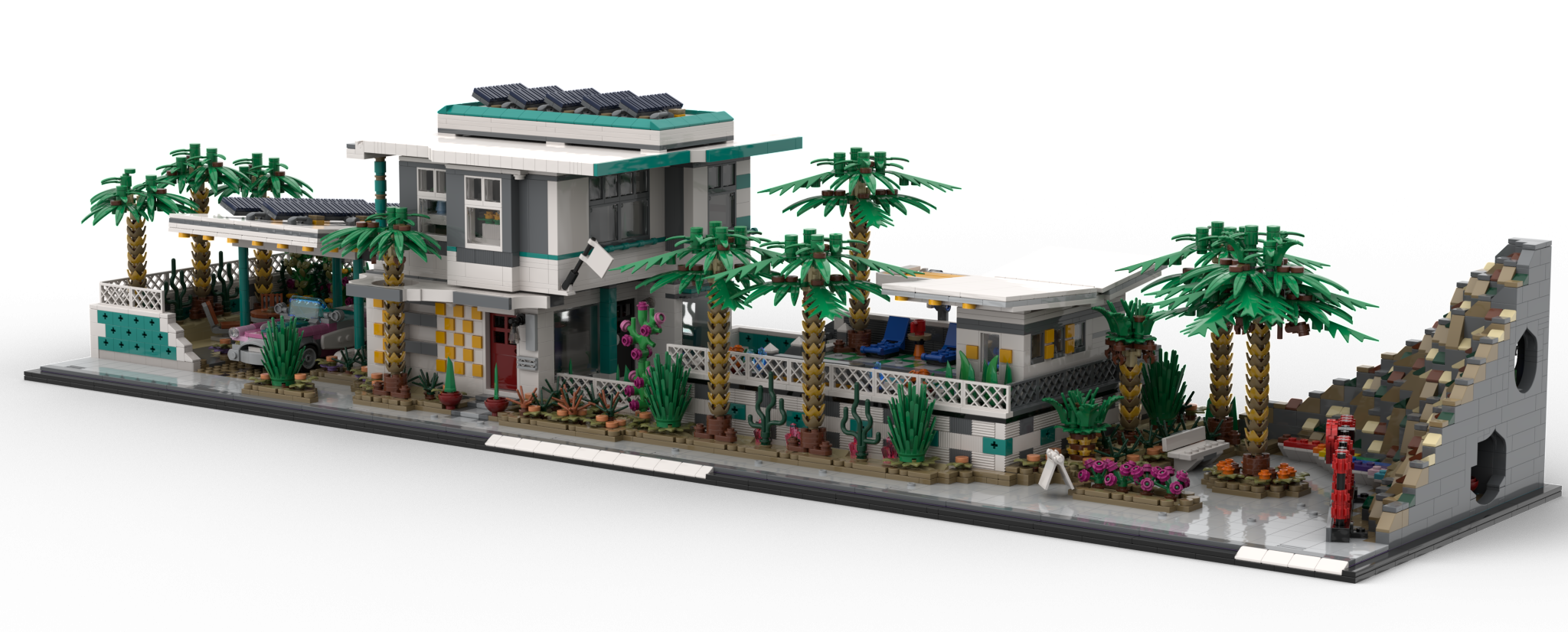
[Click image for zoom details]
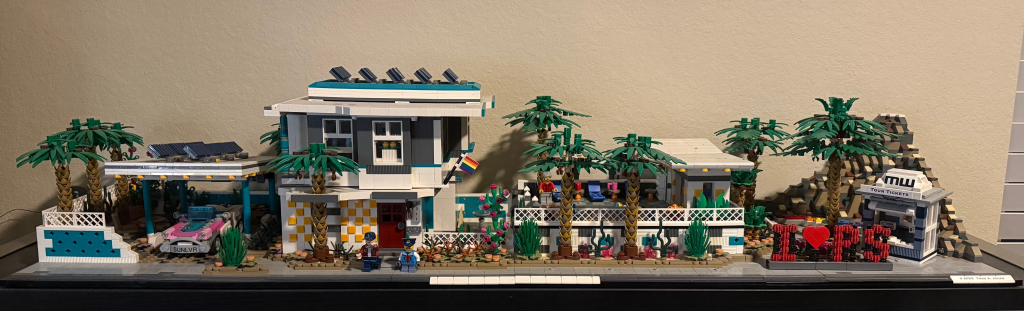
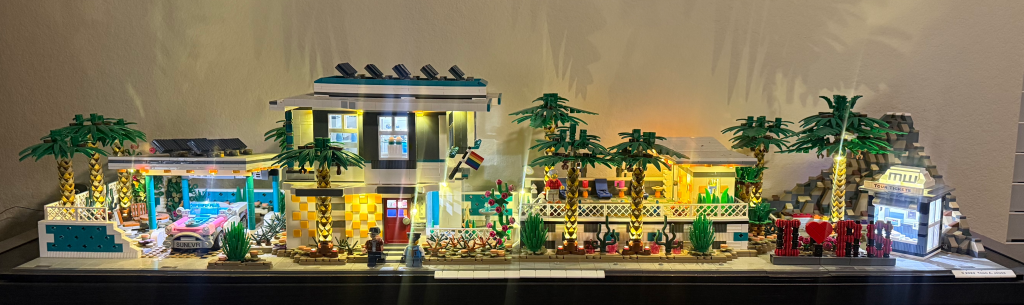
An early prototype of this model was constructed to understand building techniques and lighting effects. The real-life photo below illustrates the effects of lighting on the models. All projects will include lighting, but are not reflected in the rendered images. Use the slider to observe the effect.
Share This Story, Choose Your Platform!
How I Work?
Ideas
Each project begins with observation and curiosity – walking around town, driving through neighborhoods, reading local history, or encountering a building that sparks a simple question: Could this be recreated in LEGO® bricks?
I look at the architecture and imagine how its forms, proportions, and details might translate into the brick system.
- Would the design be challenging to engineer?
- Could lighting enhance the structure or tell part of its story?
- Does the subject align with the broader vision of this project?
Research
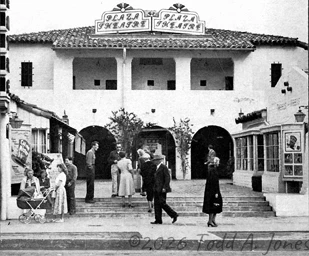
Once a building is selected, I dive into research – studying its history, architect, floor plans, and original usage, often searching for vintage photographs and lesser-seen details. I visit the site in person to understand scale, context, and surroundings. Lastly, I spend time trying to understand what can be engineered in bricks and what must be reimagined due to limitations.
Design
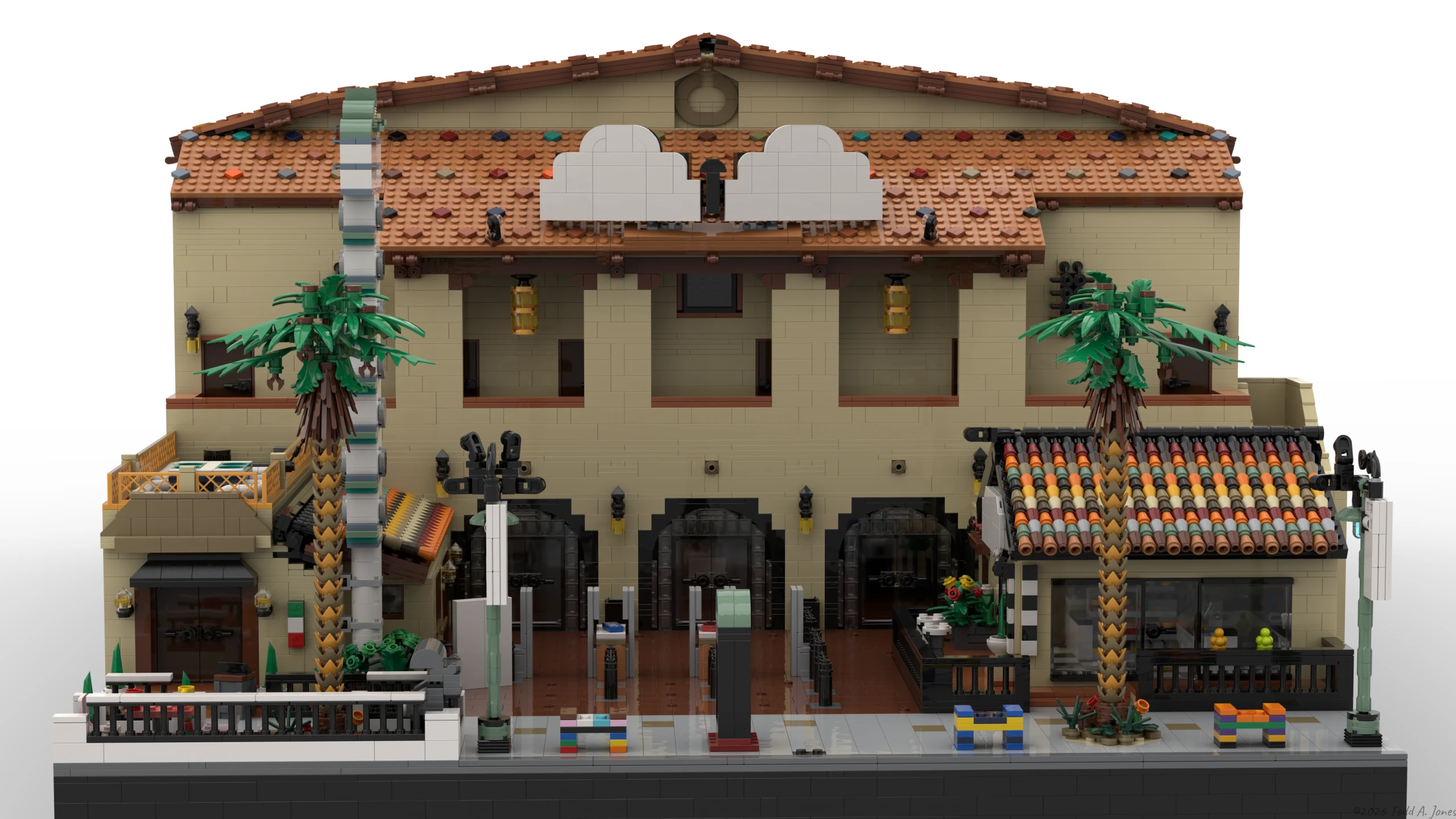
I design digital creations in Studio, a LEGO®-supported application, where I create the building’s layout, architectural elements, interior design, and exterior landscaping piece by piece. This phase often takes months and involves many revisions. Projects are reviewed for integrated LED lighting. I use the application to develop step-by-step building instructions, much like you’d see in real sets from LEGO®.
Procurement
When the digital design is finalized, I begin sourcing bricks. I find pieces from public resellers. I prefer to find used and recycled pieces. I like the idea that these bricks with decades of prior enjoyment get a new lease on life. Receiving and sorting bricks is a special joy that requires patience.
Build
Once the parts are collected, I build the project using my custom instructions. Buildings of this magnitude can take several weeks to complete. Once done the satisfaction is immense, but the work doesn’t stop there.
Lighting
Installing illumination LEDs is perhaps to most tedious and difficult part of these projects. I try to conceal as much wiring and point sources as possible, which often requires deconstruction of the model in order to install the electrical components. Sometimes minor redesigns are required and must be adapted.
Display
Preparing these creations for public display will require additional engineering—reinforcement for stability, custom stands, acrylic display covers, and reliable power sources. Final imaging of the finished project must be prepared for the website. Each installation will include a QR code linking visitors to in-depth online content: the building’s history, the architect’s biography, and high-resolution imagery of both the exterior and the richly detailed interior—details that may not be fully visible in a public setting but are integral to every design.